A single missed dose can compromise a patient's treatment and affect adherence to their care plan. A delayed shipment of surgical tools can disrupt critical procedures. Running out of essential drugs can put lives at serious risk. In the United States, healthcare supply chain management inefficiencies account for nearly 30% of hospital expenses, costing the industry over $25 billion annually, according to a source.
Healthcare supply chains are under constant strain. Unpredictable demand, rising costs, and supply disruptions make it hard for hospitals to stay stable. Excessive inventory leads to waste, while shortages put patients at risk. Delays and higher costs add to the pressure, keeping the system on edge.
Healthcare systems are actively turning to AI to tackle these challenges head-on. It predicts demand accurately, reduces waste, and improves logistics. AI also enables real-time inventory tracking and enhances visibility across the supply chain. Let's explore how AI is reshaping healthcare logistics and building a more resilient, efficient system.
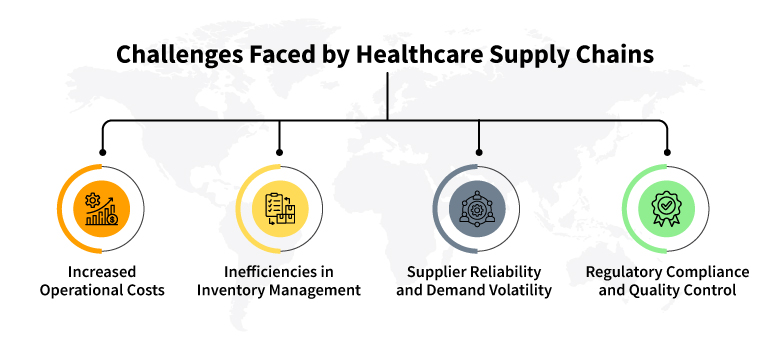
Challenges Faced by Healthcare Supply Chains
A resilient healthcare supply chain is essential for delivering timely and effective patient care. However, the industry faces significant hurdles that drive up costs, disrupt operations, and impact patient outcomes.
Increased Operational Costs: Rising costs continue to strain healthcare systems, with inefficiencies such as overstocking, understocking, and waste adding to the financial burden. These issues lead to expired supplies, emergency orders, and unnecessary spending. As per a report, the global healthcare supply chain management industry is expected to reach $2.1 trillion by 2026, with cost escalation being a major concern.
Inefficiencies in Inventory Management: Managing critical medical supplies is a constant challenge. Shortages delay treatment. Excess leads to waste. Poor forecasting and limited visibility make it hard to keep inventory at the right levels. According to a study, inefficient supply chains contribute to $765 billion in wasted healthcare resources annually. Optimizing inventory management is crucial to ensuring that essential medical supplies are available when and where they are needed.
Supplier Reliability and Demand Volatility: Fluctuating demand and unpredictable supply chain interruptions create instability. Seasonal surges and geopolitical disruptions often strain supply chains. The COVID-19 pandemic exposed critical vulnerabilities, highlighting the urgent need for greater resilience and adaptability. Without a robust system in place, healthcare providers risk delays, shortages, and increased costs, ultimately affecting patient care.
Regulatory Compliance and Quality Control: Strict regulations ensure the safety and efficacy of medical supplies, but compliance can be complex and resource-intensive. Pharmaceuticals and medical devices must meet stringent quality standards, requiring meticulous tracking and reporting. Any deviation can lead to costly recalls, legal penalties, and compromised patient safety.
How AI Can Address These Challenges
Artificial intelligence is transforming healthcare supply chains in the US, making them smarter, more efficient, and more resilient. It helps reduce rising operational costs by minimizing waste, avoiding overstocking, and streamlining procurement.
AI-Powered Demand Forecasting: AI-driven analytics predict demand with high accuracy, analyzing past data, trends, and factors like seasonal illnesses or major health events. With AI-powered forecasting, organizations can cut supply chain costs by up to 20%, improving both efficiency and patient care by aligning inventory with real-time demand and reducing overstock and emergency purchases.
Effective Inventory Management: AI optimizes inventory by ensuring the right supplies are available at the right time. Real-time tracking, automated restocking, and predictive analytics help hospitals maintain optimal stock levels. By reducing waste and minimizing stockouts, AI-driven inventory systems contribute to millions in cost savings while improving patient outcomes.
Supply Chain Transparency with AI: Lack of visibility across the supply chain leads to inefficiencies and disruptions. AI-powered platforms provide end-to-end transparency, allowing healthcare providers to track shipments, monitor supplier performance, and identify potential risks. Blockchain-integrated AI systems enhance security and traceability, ensuring authenticity and preventing counterfeit products from entering the system.
Ensuring Compliance and Quality Control: AI automates compliance monitoring by analyzing regulatory requirements and detecting deviations in real time. Natural language processing (NLP) tools streamline documentation, while computer vision can inspect medical products for defects. This reduces the risk of regulatory penalties and enhances patient safety by ensuring high-quality medical supplies reach healthcare facilities.
AI is not just improving supply chain efficiency — it is redefining how healthcare operates. By integrating AI-driven solutions, the industry can build a more cost-effective, reliable, and responsive supply chain that ultimately enhances patient care.
Challenges Ahead for Businesses in Transforming Healthcare Supply Chains with AI
While AI has the potential to revolutionize healthcare supply chains, its implementation comes with hurdles. Data integration issues, resistance to change, and high investment costs can slow adoption. In an industry like supply chain logistics, it becomes imperative for tech partners to clearly communicate the benefits and offer customized plans that truly support healthcare organizations.
Adoption Barriers: Resistance to change is a major obstacle, particularly in traditional healthcare settings where manual processes have been the norm for decades. The initial investment in AI technology can also be a challenge, especially for smaller healthcare providers with limited budgets. While AI offers long-term cost savings, the upfront costs and training requirements can deter adoption. Overcoming these challenges requires strong data governance, leadership buy-in, and scalable AI solutions.
Data Quality and Integration: AI performs best when data is clean and connected, but many healthcare systems operate in silos, making it difficult to integrate and standardize data across platforms. Poor data quality can lead to inaccurate predictions, reducing the effectiveness of AI-driven solutions. According to a report, a large healthcare provider reported a 30% reduction in data errors after adopting AI-based integration systems, highlighting the impact of seamless data management.
Wrapping Up
AI is reshaping healthcare supply chain management by enhancing demand forecasting, optimizing inventory, and improving transparency. These advancements reduce costs, minimize waste, and ensure critical supplies reach patients on time.
The future of healthcare depends on AI-driven supply chain optimization. Smarter logistics mean better patient care and lower operational costs. To stay competitive and resilient, healthcare organizations must embrace AI-powered solutions.
At Neutrino, we work alongside healthcare organizations to tackle some of the most pressing operational challenges. From preventing delays with real-time tracking to reducing staff strain through intelligent warehouse planning, our AI-powered solutions are designed to support both providers and patients. With smarter forecasting, automated delivery scheduling, and enhanced visibility across the supply chain, we empower healthcare systems to stay ahead of disruptions and deliver better care.